
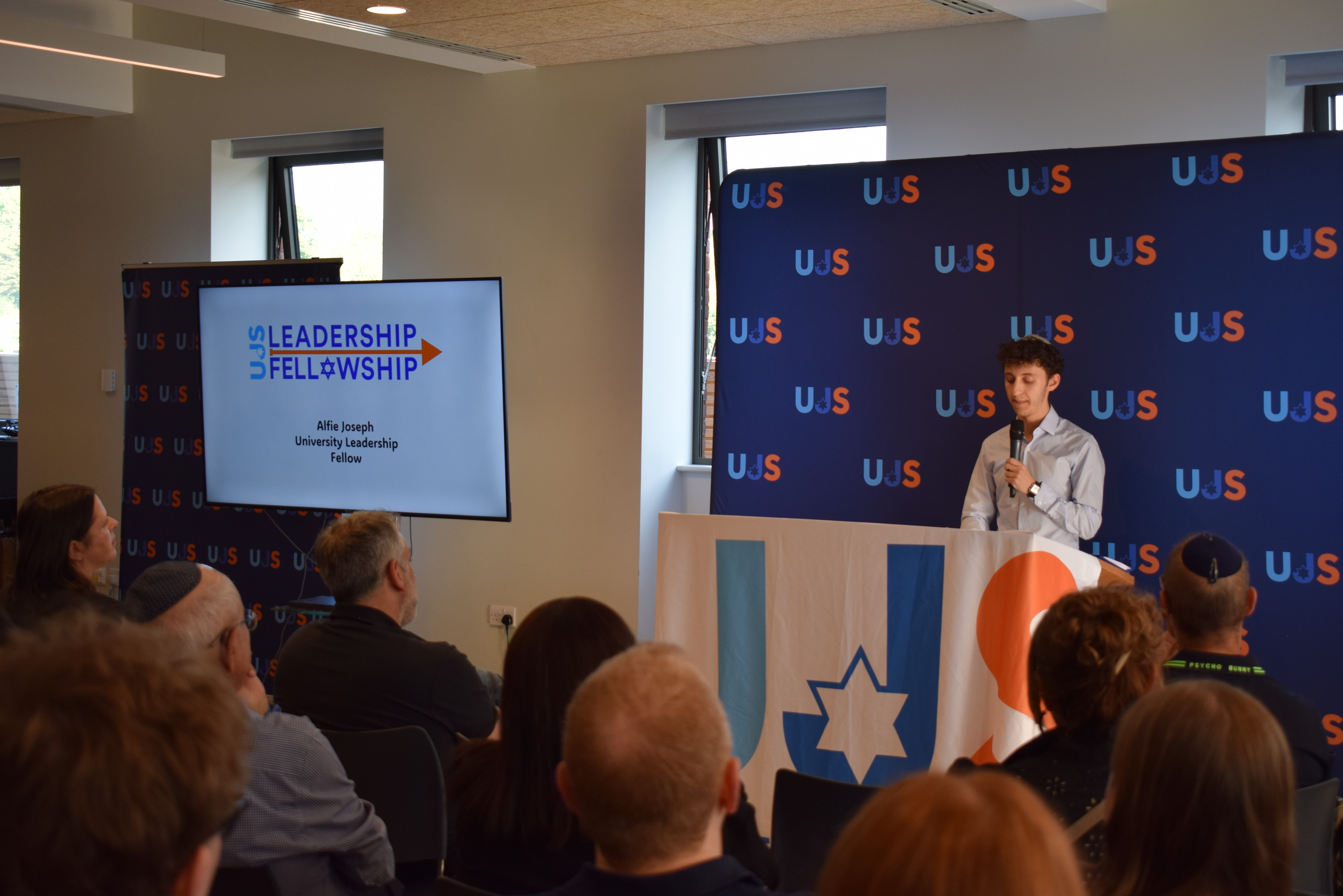
It’s a real privilege to be standing here tonight to mark the end of the UJS Leadership Fellowship although I have to admit, part of me can’t quite believe it’s already over. It feels like just yesterday when we all met at the opening seminar, where I soon realised I was the youngest in the room, and also the token northerner. Like most things at university, it feels like I blinked and suddenly we’ve reached the final chapter. But what a journey it’s been.
When I first applied for the fellowship, I didn’t quite know what to expect. I imagined a few seminars, maybe a couple panels, and hearing what it means to be a leader. But what I didn’t expect was to be genuinely challenged, inspired, and completely immersed in the complexities and richness of Jewish life not just here in the UK, but on an international scale.
Over the past few months, we’ve had the opportunity to meet and learn from so many brilliant people; from local organisations to Jewish educators, activists, and even multiple ambassadors. These weren’t just lectures; they were conversations. We were encouraged to ask hard questions, to reflect afterwards in processing, and occasionally, to sit with the discomfort of not having an answer we agree with.
As Jewish students navigating a world that can sometimes feel quite complicated; One of the most meaningful things I’ve taken away is knowledge, not just facts or dates, but a far deeper understanding of Jewish history, identity, and resilience. Through every seminar, conversation, and journey, I’ve gained a greater awareness of where we come from, the diversity within our community, and the challenges we continue to face. It’s been a clear reminder that leadership begins with learning, looking to the past, grappling with the present, and asking: how do we shape the future?
The trip to Bulgaria was a particular highlight, it brought the cohort from friends to family. It was my first real exposure to a Jewish community so different from my own, one that has endured centuries of empires, wars, and persecution. From Ottoman rule to Bulgaria’s alliance with Nazi Germany. Today, there are still around 5,000 Jews living there, and not just surviving, but actively leading, building, and growing. We met Maxim, the head of the Shalom Jewish community organisation, who shared his approach to education and outreach. We had dinner with young Jewish leaders and saw how they’ve built their own sense of identity and belonging of what being Jewish means to them. It reminded me that a Jewish continuity doesn’t always look the same but it’s always rooted in community.
Then came Israel intense, fast-paced, and packed from morning until evening. It’s hard to capture everything we experienced, but a few moments stood out. In Sderot, we heard from a member of a local urban kibbutz who described being with his in-laws on October 7th as Hamas stormed the building next to his own. He showed us an image Hamas had published online, with a red target over the second building, eighth floor, right-hand side - the exact apartment we were sitting in. It was a chilling reminder of what living in israel can be like just 1km from the Gaza Border. Visiting the Nova Festival memorial site was equally emotional. Hearing from a survivor, who shared how he and his friends escaped to a nearby farm and hid in a crawl space, made it clear just how devastating the attack had been. These weren’t just stories they were real people, sharing their pain and resilience with us.
At the same time, we were encouraged to engage with a wide range of perspectives. We visited the British Embassy in Tel Aviv, and later in Jerusalem, we met a Palestinian bookshop owner who spoke about life in East Jerusalem. We experienced a dual narrative tour of the Old City, where we explored the four quarters. We heard from guides with different stories, and walked through areas that reflect Jerusalem’s deep historical, religious, and political layers. It reminded us that leadership in our community means not avoiding complexity, but leaning into it with curiosity and empathy.
Being in Israel also gave us the chance to experience the country on a more personal level. The food tour in Shuk HaCarmel was a great way to see the diversity of cultures within Israeli society tasting dishes from different communities and seeing the energy of daily life. Beyond the structured sessions, we also had moments that felt deeply meaningful. On Friday night, after dinner, we walked to the Kotel where as a group we sat, heard stories, and tisched.
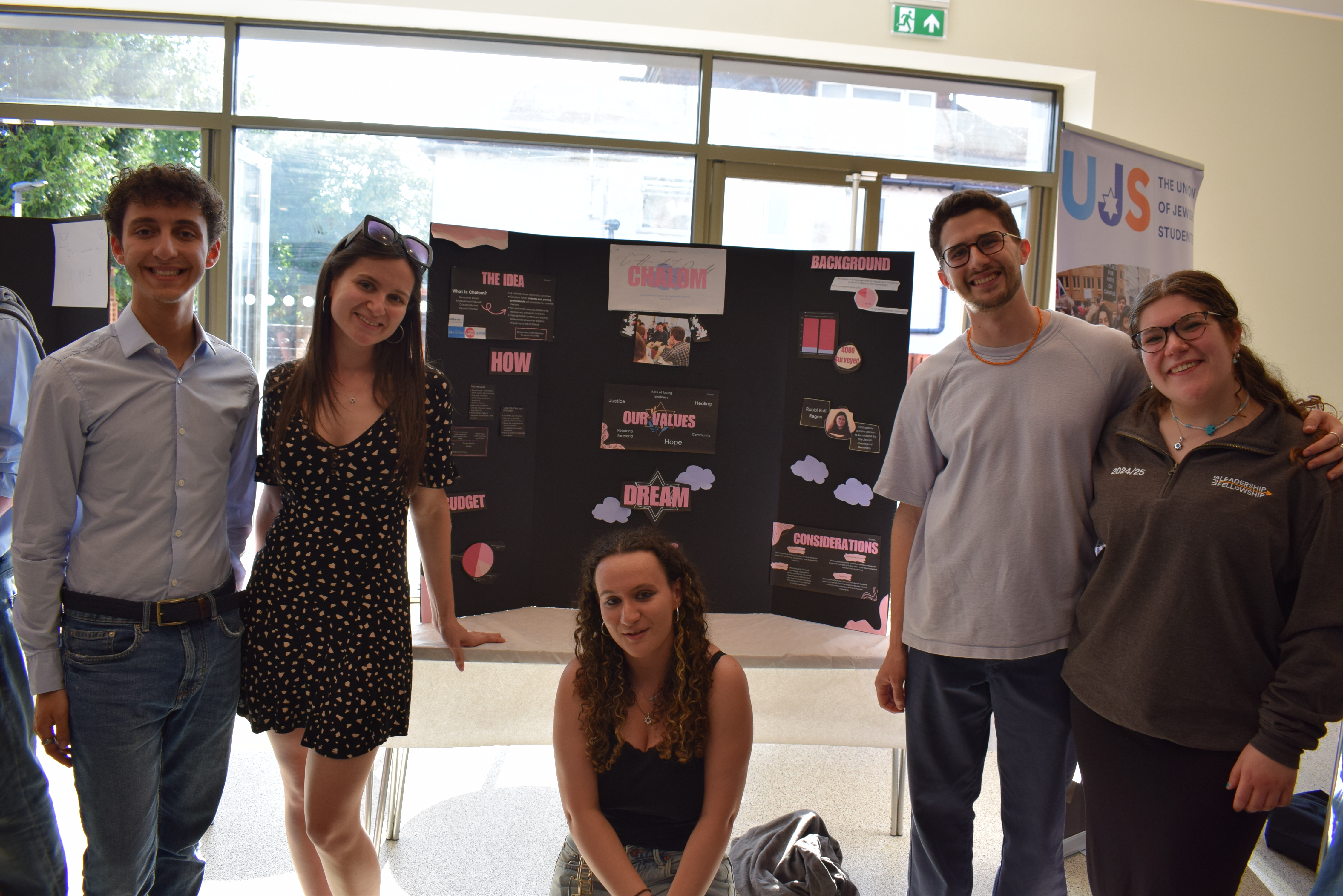
Every day felt like a full week packed from morning until evening with just enough time for someone to misplace their water bottle or forget what time we were meeting. But through it all, we kept asking: what does it mean to lead? What does it mean to engage, to sit with discomfort?
We took part in monthly seminars where we heard from a wide range of engaging and insightful speakers. We explored how the Jewish community has developed in the UK, gained practical skills in leadership and communication, heard about organisations which were founded with a core to help non Jews, and even learned how to navigate challenging situations, including how to respond effectively under media pressure.
What I’ve come to understand is that leadership isn’t about having all the answers or always knowing what to say. It’s about being curious. It’s about listening. It’s about showing up for your community even when it’s messy, uncomfortable, or unclear. Especially then.
Now, as we close this chapter of the fellowship, I know that the journey doesn’t really end here. What we’ve gained; the skills, the knowledge, the connections, the memories (and, a Google Drive full of pictures) stays with us. We’ll carry it onto our campuses, into our communities, and into the roles we’re still growing into.
So to all the speakers who gave up their time, to those in the UJS office who worked behind the scenes, and especially to Arieh, Sami, Rebecca, Samantha, and Emma, thank you. Your leadership, patience, and encouragement made all of this possible.
And to my fellow fellows. Thank you. Thank you for your honesty, your humour, your insights, and for letting me be your MC in Bulgaria. It’s been a real honour to be part of this cohort. We’ve shared a lot from meaningful conversations and complex debates to late-night processing sessions, interesting food, and probably too many group photos. What’s stood out the most is how willing everyone has been to show up not just physically, but emotionally, intellectually, and as leaders in the making.
As Rabbi Jonathan Sacks once said, “there are no universal rules when it comes to leadership. It is an art not a science.” And I think this group has truly embodied that approaching leadership not as something rigid or formatted, but as something human, reflective, and deeply rooted in our own core values. We've each brought something different, and even being the youngest it didn’t mean I had the least impressionable things to say. Together we've created something far more meaningful than any single one of us could have alone.
Here’s to the next step, and to never underestimating what a group of engaged, slightly sleep-deprived students can achieve when given the chance to lead.
Thank you
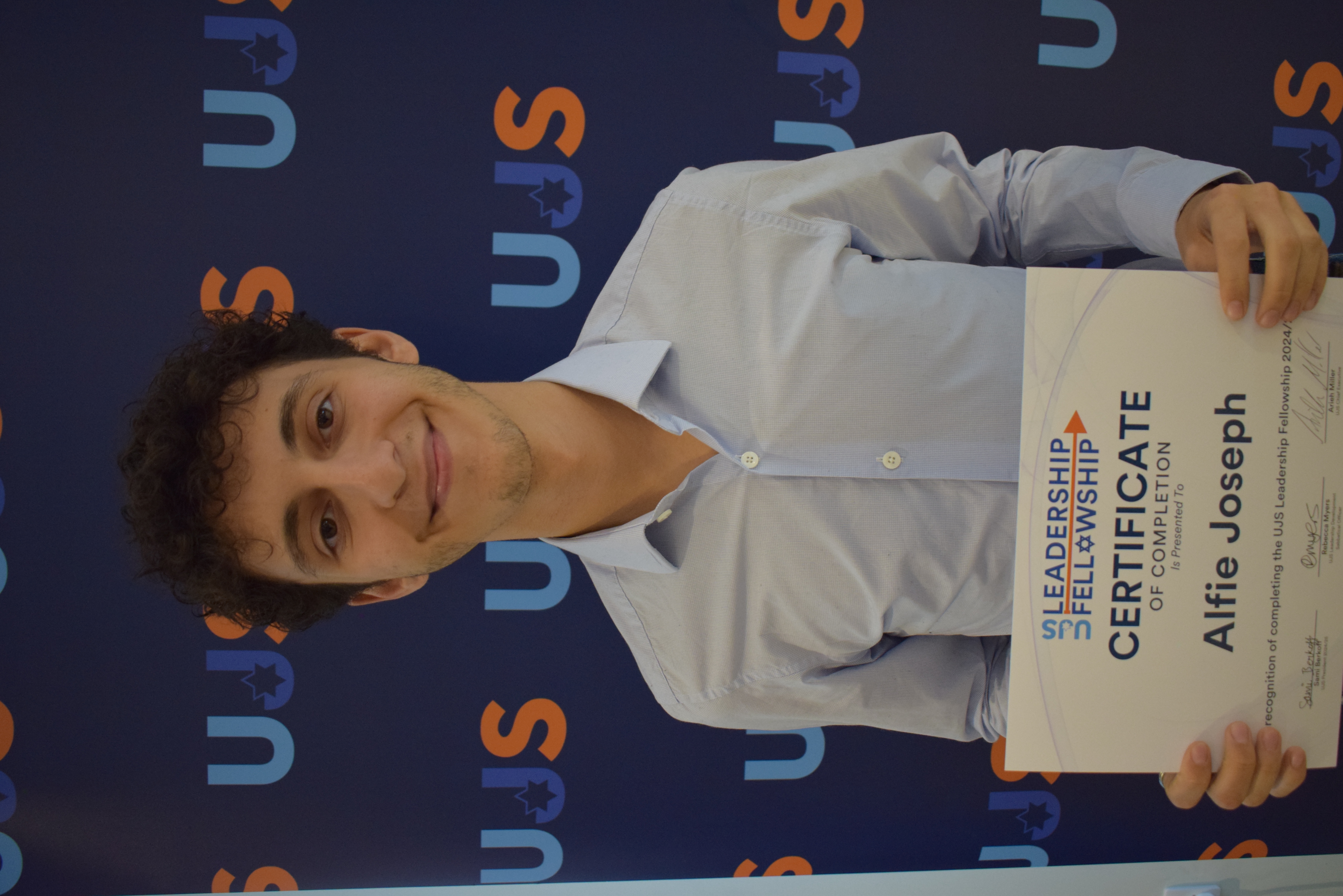
Alfie Joseph - UJS Leadership Fellow 2024/25