
After what can only be described as an incredibly emotional and thought-provoking start to the trip, as we gathered to bring in Shabbat at the Kotel, I found myself reflecting on what message I wanted to share. There were countless powerful moments from the week I could have spoken about — moving testimonies, heavy encounters, and insightful discussions too. However, rather than solely focusing on what we had already learnt this week, I chose instead to turn to the events of next week with the festival of Pesach just around the corner. We use this time of year to recognise and understand the pain within our nation’s history, in order to celebrate Jewish resilience at its core. This time of year calls us to look both inward and backward — to reflect on the hardship and pain woven into our Jewish history — so that we may also fully appreciate the strength that defines our community spirit. It is a season of remembrance and reawakening; of acknowledging suffering, and celebrating survival.
Among the many traditions of Seder night, one of the most familiar is the story of the Four Sons: the wise, the wicked, the simple, and the one who does not know how to ask. While often read as four different types of children asking questions, it has been reinterpreted — such as from Rabbanit Yemima Mizrachi — as four responses to generational trauma, or four psychological mindsets when confronted with pain, uncertainty, and discomfort.
The wise son can be seen as the embodiment of a generation that has not only acknowledged their trauma but has also found a way to process it. They’ve asked the difficult questions, sat with the uncomfortable truths, and cultivated a mindset that allows for healing — not just for themselves, but for the generations that follow. Yet, their journey is often internal, deeply personal, and at times, solitary.
The wicked son, in this context shows a type of wickedness that does not stem from malice, but rather from emotional distance — from the inability or unwillingness to confront one’s own pain. This is the generation that hides behind deflection and denial, trapped by stigma and fear. Whether or not they know what questions to ask is secondary; the real challenge lies in their refusal to admit that they are hurting. This form of unaddressed trauma often calls out for communal intervention — reminding us of the crucial role others play in our healing and well-being.
The simple son represents a a lack of capacity or willingness to engage with trauma. There is no malicious intent here, but rather a naivety or detachment that can allow trauma to quietly pass from one generation to the next, unchallenged and unresolved.
And finally, the son who does not know how to ask. The key aspects of this son’s representation of trauma includes the idea of being stuck with their pain and suffering, with no way of knowing how to deal with difficulty, suffering in silence. It is highly likely in this case that the trauma is also subconsciously carried on to future generations.
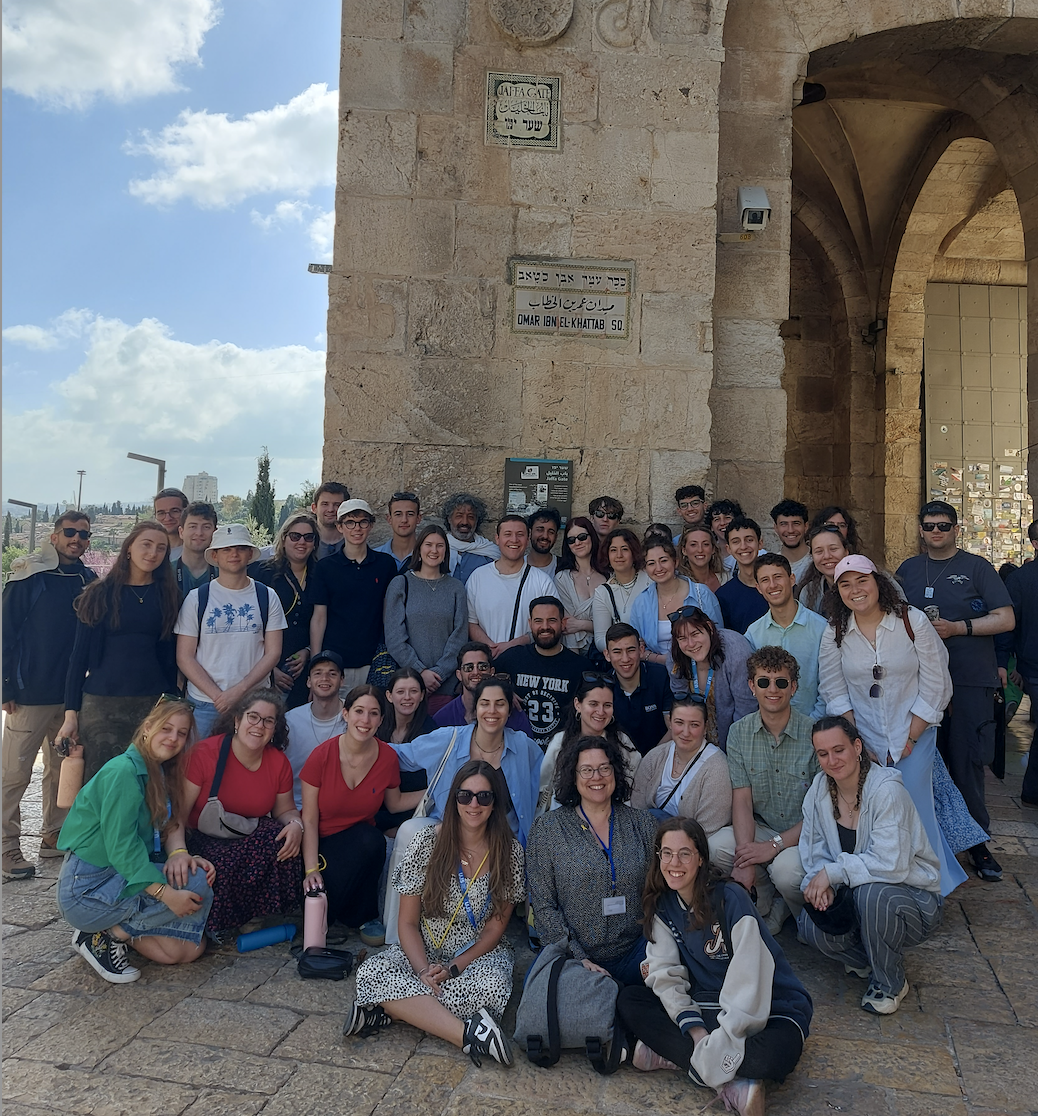
Having spent part of this week in Israel meeting Mandy Damari, mother of now released British-Israeli hostage Emily Damari, as well as Shelev, a survivor of the Nova festival and the community of Sderot, it is clear to see that each person who has any sort of connection to the atrocities of October 7th and the ongoing war is dealing with their trauma in their own way. They may take a specific approach to working through their pain, or they use a variety of stances represented by the 4 sons, reminding me that both trauma and healing will manifest in a different way for each person.
All of our communities - here on the Fellowship, the wider Jewish student sphere, and as Jews in today’s world - are processing differently, finding their own ways to make sense of what has happened over the last 18 months. The events of October 7th will one day be studied alongside other painful chapters of our story, as moments that defined a generation and shaped the identity of those who came after.
What strikes me most this week is the power of vulnerability. As our group has come to better our understanding of the Israeli-Palestinian conflict, also learning about the harsh reality for civilians living across the region at a time of war and the ways in which leaders of our community attempt to work towards a brighter future, our own connections to Israel have both been strengthened and been challenged, reinforcing this sense of vulnerability. Conversations we have had this week have not been easy, but they are certainly necessary and beneficial to us all. Alongside this, I am filled with immense gratitude. Firstly, gratitude that we were able to leave the Nova Festival site safely after a few hours, while so many others were rid of that opportunity. And secondly, gratitude for the chance to speak in such depth about the region’s politics and governance, and to explore how we — as Jews in the diaspora — can make a meaningful difference in shaping a more just and peaceful future.
This has reinvigorated my own Jewish identity, and I have learnt that strength and vulnerability are not opponents but are companions. Whilst recognising and processing our community trauma, in whatever way that may look like, we should use this opportunity and the power of vulnerability to also acknowledge our Jewish resilience, pride and strength. The themes of trauma, vulnerability, healing, and hope will stay with me far beyond this trip, they have shaped not only how I understand the past, but also how I wish to engage with the present, and what kind of future I hope to help build.
Tash Spungin - UJS Leadership Fellow 2024/25